

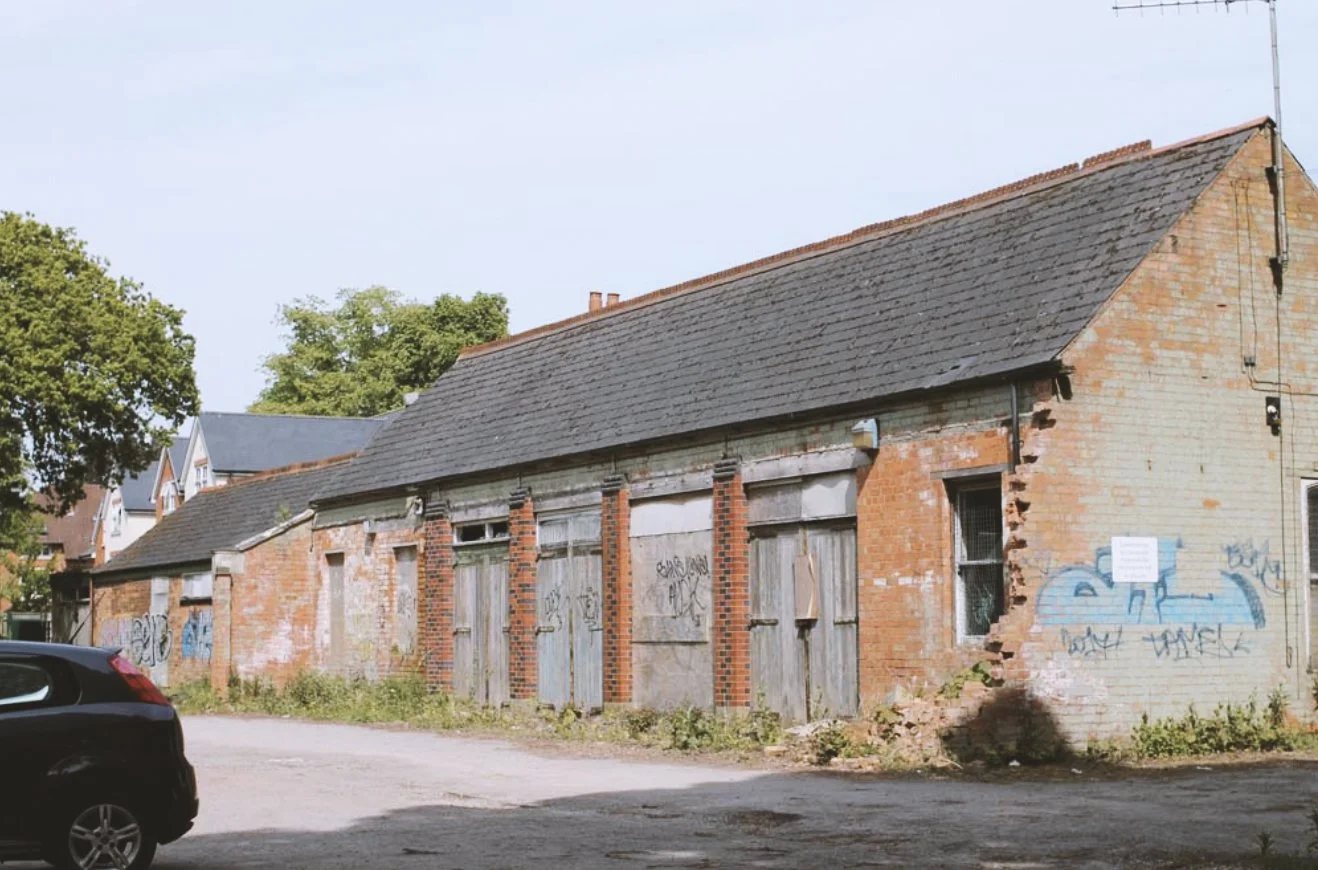

the tea sheds
were never just
buildings.
The Tea Sheds Story project is the development of a derelict site, historically known as “The Tea Sheds” (also known more recently as the Queensbridge Depot) on Queensbridge Road in Kings Heath, Birmingham, into a new home for Riverside Church and a shared community building.
The site has stood empty for many years, but its history is important. At the turn of the twentieth century, it belonged to the famous Cadbury family. The Tea Sheds were used by Helen Cadbury and her husband Charles Alexander as a place of welcome, community meals and Christian ministry.
The new development will, in many ways, continue that legacy in a contemporary form.
Why this project,
and why now?
Riverside Church has been in South Birmingham for over forty years. Our heart is to be a blessing to our city. Riverside provides a large number of community-focussed activities including the biggest face-to-face debt advisory service in the Midlands, a Social Pantry, a performing arts ministry that serves local schools and hosts numerous community holiday clubs, regular café and meals for the community, a wide variety of counselling and support services and many other regular activities for all generations.
Our current home on Alcester Road is at capacity on Sundays and throughout the week, and it is ageing and increasingly expensive to maintain. The new building will allow ministries to considerably expand and serve the community to a greater extent. It will also provide significant additional space for two neighbouring schools as part of a long-term partnership.
THE SITE & THE DESIGN
-
We have been searching for a new site for several years. The Queensbridge Depot site came up, and our application was approved by Birmingham City Council in spring 2026. The site will be held on a 199-year lease, which is conditional on planning consent.
-
The building will be flexible, accessible, and of significant benefit to the community.
Detailed plans are currently being drawn up, which will then go through planning. In short, it is envisaged that the building will have a mixture of community spaces, café, spaces for a wide variety of activities, a worship & community hall, dedicated spaces for the schools, counselling rooms and offices.
-
Accessibility has been central to the brief from the start. The building will include a Changing Places toilet, which means that people with more complex disabilities can genuinely use the space. We are hoping to include a sensory room for children and adults who find busy spaces overwhelming.
Sightlines, signage and the overall layout are being shaped to be easy to navigate for everyone.
-
Flexibility and dedicated space is being designed in. The building will have two entrances — a church and community entrance, and a dedicated entrance for school use on weekdays with secure access throughout.
-
The brief from the outset has been for a building with low energy use and a low carbon footprint.
Further options for going beyond current building regulations will be explored as we continue the design process.
-
The site sits beside the newly reopened Kings Heath railway station and on a major bus route, so a substantial proportion of users will arrive by public transport, on foot or by bicycle.
Sunday parking arrangements are being developed with Queensbridge school, and additional parking opportunities are being explored to support weekday and weekend use.
THE COMMUNITY

Who is the building for?
The building is being designed to serve a wide range of people acting as a community hub including a long-term shared resource for two neighbouring schools and the regular meeting place for Riverside Church.
It will be open to the wider community through the café, the social pantry, the money advice service, counselling rooms, and a programme of activities for families, older people and others.
The location, between Moseley and Kings Heath, places the building at a natural meeting point for two of Birmingham's most active neighbourhoods.
How will the local community be involved as the project develops?
A formal community consultation will take place ahead of the full planning application, with events for local residents to view the plans, ask questions and contribute their thoughts.
Information will be made available through this website, and the project teams welcome direct conversation with neighbours, community groups, local councillors and other interested parties at any stage.
How can grant-making bodies and other partners find out more?
A full case is being prepared and will be available to interested funders and partners in due course.
In the meantime, the project teams would be pleased to meet, share the plans, and discuss how the building's mix of worship, community and educational uses might align with a funder's priorities.
PLANNING, TIMESCALES & COST
What are the planning timescales?
A pre-application enquiry has already been submitted, and the response from Birmingham City Council was positive in principle. A range of technical surveys are now under way. A full planning application is expected to be submitted in autumn 2026, with a decision anticipated in early 2027.
Construction would follow once funding is in place. Once funding has be secured, the earliest realistic completion date is around three years from spring 2026.
How much will the project cost, and how will it be funded?
The current estimate, at today's prices (spring 2026), is in the region of £6 million. This figure will be refined as the design develops and a full quantity surveyor's costing is produced. Funding will come from four main sources: the giving of the Riverside Church family, the realisation of value from the existing church premises, grants from charitable trusts and foundations, and — if needed — a manageable level of borrowing.
How is the project being governed?
The project is overseen by Riverside Church's leadership and trustees, with day-to-day delivery led by a steering group accountable to them.
Beneath the steering group sit specialist teams and professionals covering design, legal, and fundraising. Each team is chaired by a volunteer with relevant expertise and supported by external professionals: an architectural practice with extensive experience of church and community buildings, a chartered surveyor leading on property matters, and a national firm of solicitors specialising in charity work.
As a church, it will also be underpinned by a team of dedicated people committed to praying for the project.